

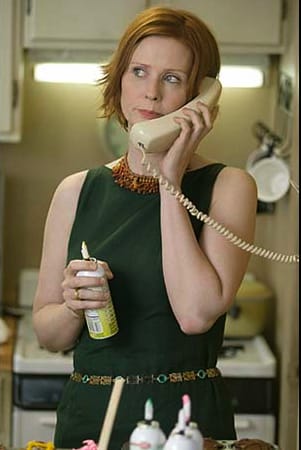
Miranda’s home mirrors the push-pull between control and overwhelm, independence and intimacy.
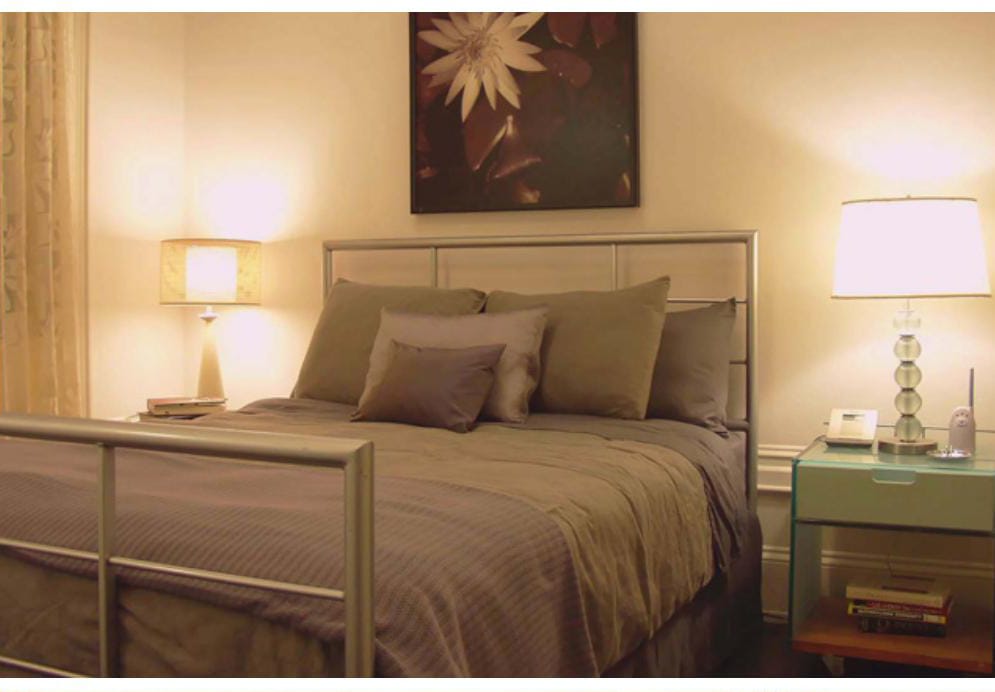
In her bedroom, the bed rests against a solid wall, providing safety and stability. The Yin atmosphere supports rest and recovery- soft colours, grounding energy, and a sense of retreat.
But the mismatched nightstands tell another story: a subtle imbalance between partners, a relationship in which emotional load isn’t evenly shared. The door opening across from the pillow area adds to this sense of exposure – energy rushing in, never fully settling. Even in sleep, Miranda seems ready to get back up.
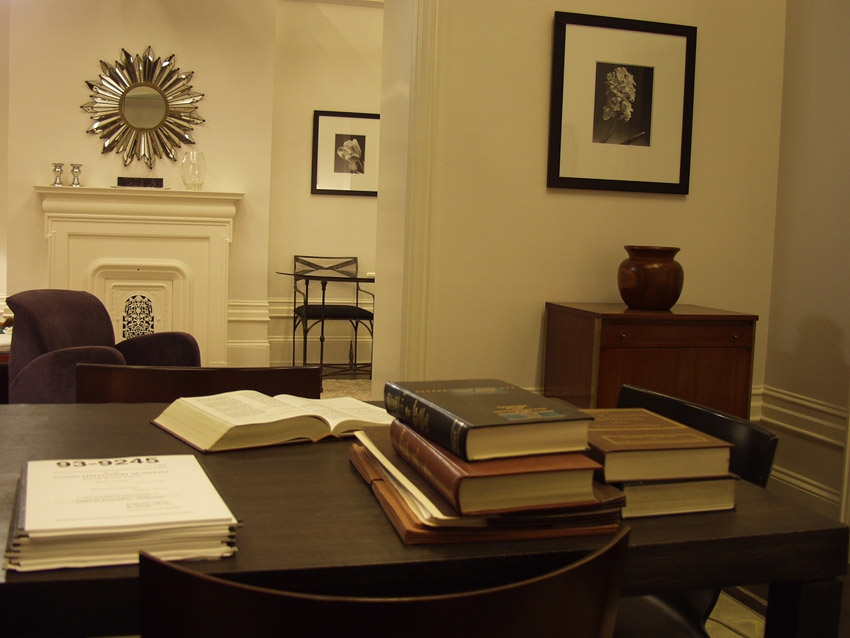
Miranda’s home reflects the sharp, rational mind that built her career. Her desk sits in the command position, giving her a full view of the room- a natural setup for someone who thrives on control and clarity. From a Feng Shui perspective, this position represents power, readiness, and the ability to respond- a fitting mirror of Miranda’s life in constant motion.
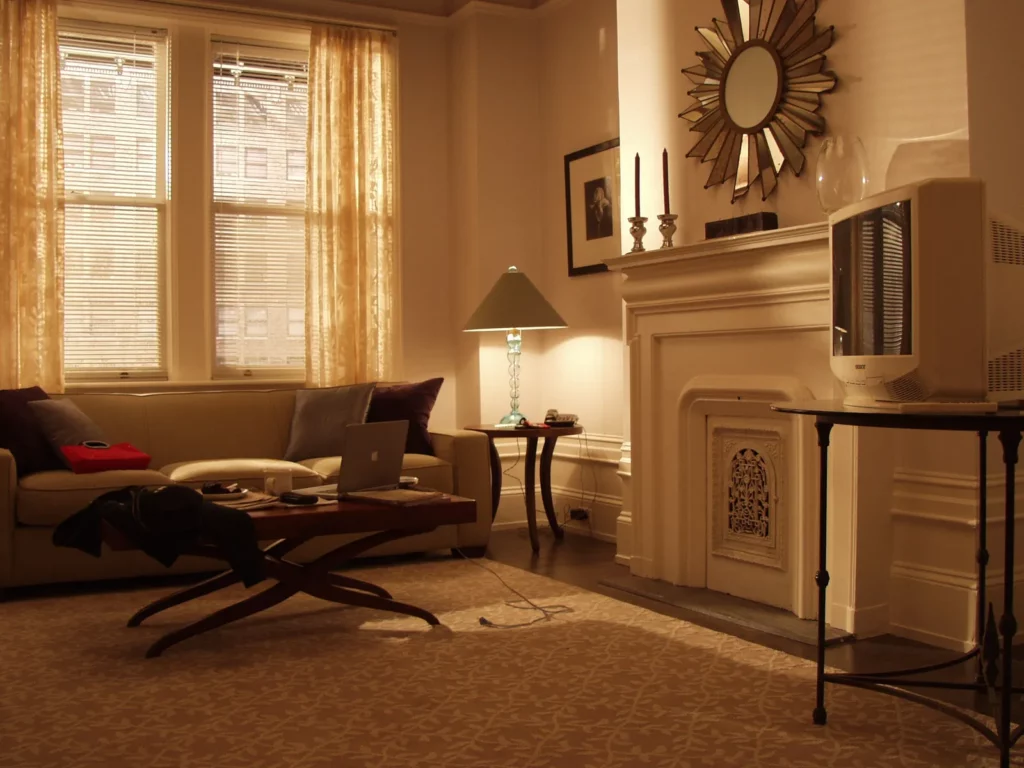
The sofa placed beneath the window lacks solid backing, which can create a subtle sense of vulnerability and emotional instability.
And while the furniture layout may look cozy at first glance, it doesn’t truly support communication or connection- conversations feel more parallel than shared.
Evidence of an Underlying Need for Partnership
Throughout her home, paired candles appear again and again, suggesting that beneath her self-reliant exterior, Miranda held a quiet wish for partnership.
Even if she didn’t say it, her space did.
In Feng Shui, our spaces don’t lie.
Miranda’s home speaks the language of overextension- a reminder that sometimes, even the most successful among us need to pause, breathe, and let the Chi soften.
Because at the end of the day, our homes can build us — or quietly tear us apart.
And like Miranda, we’re all learning where to draw that line between doing and being.